

Bottle Label Printing for Clear Product Information
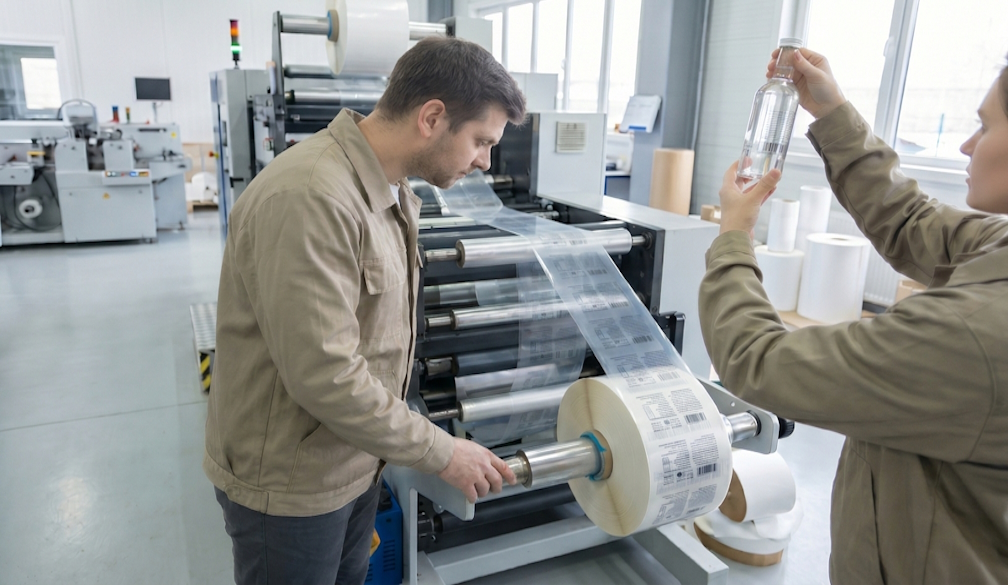
A bottle label helps customers identify a product, read key details and recognise a brand on a crowded shelf. Its design needs to work with the container shape, the information being presented and the conditions in which the bottle will be stored or handled. Bottle label printing should therefore be planned around both visual communication and practical performance.
Hyde provides information about its bottle label printing service on a dedicated webpage. Businesses exploring bottle label printing can use the page as a starting point while preparing details about bottle dimensions, label content and the intended application. These details help ensure that the finished label suits the product rather than relying on artwork alone.
A successful label balances legibility, layout and suitability for the packaging. Small text, crowded design elements or unclear contrast can make information difficult to read. Reviewing the label at its actual size before approval helps identify issues that may not be obvious on a computer screen.
Organise the Label Information
Begin by deciding which information must appear on the label and how it should be prioritised. Product name, brand elements and supporting details should be arranged so readers can find the most important information quickly. Check all wording carefully before artwork is approved.
Where the product requires specific declarations or instructions, confirm the applicable requirements with the appropriate regulatory or compliance adviser. Do not assume that a design is compliant simply because it resembles another product’s label. Hyde’s bottle label printing page can be reviewed for the company’s published service information.
Design for the Bottle Shape
A label needs to fit the container surface without obscuring important information or creating awkward folds. Bottle curvature, available panel space and the position of seams or edges can affect how the design appears once applied. Use accurate bottle measurements and review the artwork at the intended finished size.
Check that text, logos and important details remain clear when the label is wrapped around the bottle. If the container tapers or has a pronounced curve, the layout may need to account for that shape. A physical sample or suitable proof can help reveal alignment and readability issues before a larger production run.
Consider Use and Handling Conditions
Labels may encounter moisture, refrigeration, friction or frequent handling depending on the product and distribution process. These conditions should be described when discussing materials and printing options. The suitable choice depends on the actual application, so confirm performance requirements with the print provider rather than assuming every label material behaves the same way.
Think about how bottles will be stored, transported and displayed. If labels must remain legible after handling, inspect a sample under representative conditions where practical. Bottle label printing should be assessed against the intended environment as well as the appearance of the design.
Check the Label at Actual Size
Review the design at the dimensions it will have on the bottle, because text and spacing can look different once reduced. Check that product names are easy to identify, important details are not crowded and contrast remains adequate. Bottle label printing should be assessed on the finished format rather than only on a full-screen artwork file.
Where possible, apply a proof or sample to the intended container and inspect it from normal viewing angles. This helps reveal whether the curve affects readability or whether any element sits too close to an edge. Record changes clearly before approving the final artwork.
Keep a Clear Approval Process
Decide who is responsible for checking wording, artwork dimensions and final approval. A consistent process reduces the risk of different teams approving different versions or overlooking a small but important detail. Keep the approved file in a known location and identify it clearly for future reorders.
Hyde’s bottle label printing information can be reviewed when preparing a job, while production specifications should be confirmed directly with the provider. Good version control helps businesses keep bottle label printing consistent as products and packaging requirements evolve.
Proofread and Approve Before Printing
Artwork approval is an important quality-control step. Check product names, spelling, quantities, contact details, barcodes and other information for accuracy. Confirm that the final file matches the intended dimensions and that no text or graphic sits too close to the edge.
Hyde’s online service page is a useful starting point for reviewing bottle label printing information. Before production, confirm specifications, artwork requirements and timing directly with the provider. A careful review helps reduce avoidable reprints and ensures the label communicates the intended information clearly.