

Kitchen Renovations: Design Trends That Are Reshaping Australian Homes
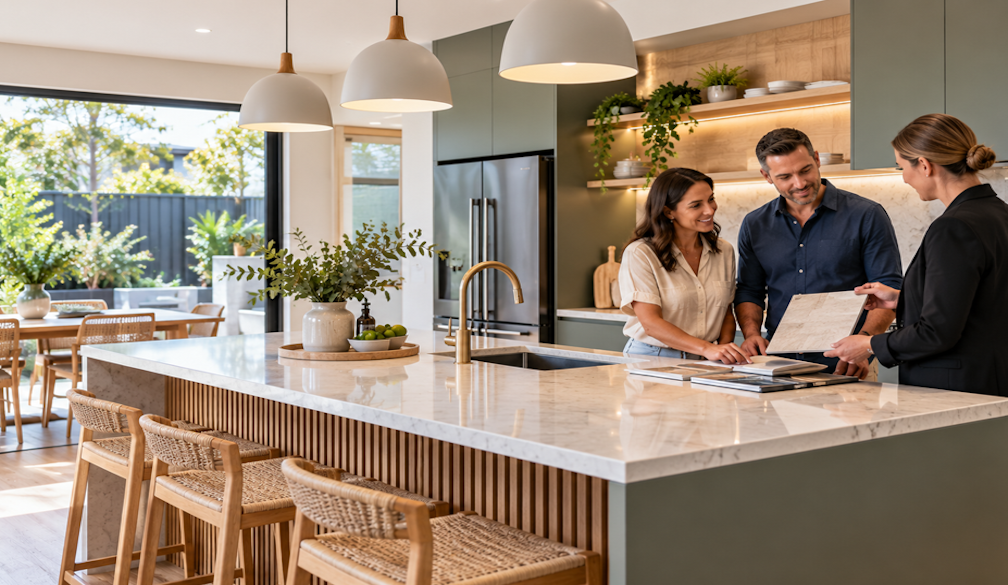
Walk into almost any newly renovated home in Australia and you'll notice a shift. Gone are the heavily ornate cabinetry styles and cluttered benchtops of the early 2000s. What's taken their place is something altogether more considered. Homeowners undertaking kitchen renovations today are thinking less about individual elements and more about how a kitchen functions as a complete, liveable space. The result is a wave of design choices that blend practicality with genuine visual appeal, and a growing willingness to invest seriously in the room that arguably does the most work in any home.
This piece looks at the major directions shaping kitchen renovation projects right now, from the enduring appeal of classic cabinetry styles to the influence of Scandinavian design principles. Whether you're planning a full kitchen replacement or simply trying to understand where the market is heading, these trends offer a useful lens.
Why the Kitchen Has Become the Priority Room
For much of the 20th century, Australian kitchens were functional spaces, necessary but not necessarily central to how people lived. That changed gradually, then all at once. Open-plan living collapsed the distinction between kitchen, dining and lounge. The rise of home cooking culture, accelerated by the pandemic years, put a premium on kitchens that actually worked well for serious food preparation. And a generation of homeowners who grew up watching renovation television developed a sophisticated eye for what a well-designed kitchen looks like.
The upshot is that kitchen renovations now represent one of the largest single investments homeowners make in their properties, and they're approaching that investment with corresponding seriousness. Industry data consistently shows kitchens returning among the highest dollar-for-dollar value of any renovation category when it comes to resale, which adds a practical dimension to what might otherwise be a purely aesthetic decision.
For designers and builders, this means working with clients who have done their research, know what styles they're drawn to, and have clear expectations around durability, functionality and finish. The days of "we'll just update the benchtop" as a renovation strategy are largely behind us.
The Enduring Appeal of Shaker-Inspired Cabinetry
If one style has defined the past decade of kitchen design in Australia, it's the shaker aesthetic, and it shows no sign of retreating. The reasons are easy to identify. Shaker cabinetry, with its inset panelled doors and clean rectilinear lines, occupies a productive middle ground between traditional craftsmanship and contemporary restraint. It looks at home in a heritage terrace and equally at ease in a newly built suburban home.
What has changed is how the style is being interpreted. Early iterations tended toward white-on-white, with painted shaker doors and white stone benchtops. The current generation of modern shaker kitchens takes a more layered approach: two-tone cabinetry combining upper and lower cabinet colours, matte finishes replacing gloss, and hardware choices (brushed brass, matte black, aged nickel) that add warmth and character without overwhelming the overall composition.
Natural stone has also displaced engineered stone in many higher-end projects. Marble, granite and quartzite benchtops bring genuine variation and a sense of material richness that engineered products, however technically accomplished, struggle to replicate. Waterfall edges, where the benchtop material continues down the side of an island, have become a near-standard feature in aspirational renovations.
The other notable shift is in the treatment of functional elements. Overhead rangehood extraction units, once designed to disappear, are now statement pieces: architectural hoods in plaster, stone or integrated cabinetry that become focal points rather than afterthoughts. Island benches have grown, in some cases taking on the role of the dining table entirely, with generous overhangs for bar stool seating.
Scandinavian Principles and the Case for Restraint
Parallel to the shaker revival, and in some ways overlapping with it, is a sustained influence from Scandinavian design philosophy. It's worth being clear about what this means in practice, because "Scandinavian" has become a catch-all term that can mean almost anything.
At its most coherent, Scandinavian kitchen design is defined by a specific set of commitments: to natural materials over synthetic ones, to light amplification in spaces that may not have abundant natural illumination, to the elimination of decorative elements that don't also serve a function, and to a palette built around whites, greys, and warm wood tones rather than high-contrast drama.
The most successful Scandinavian kitchens achieved in Australian homes translate these principles into the local context rather than copying them wholesale. Australia's climate and lifestyle differ substantially from northern Europe's, particularly around the relationship to outdoor living, the different light quality, the tendency toward larger footprints. The result tends to be Scandinavian-influenced rather than strictly Scandinavian: the same commitment to materials and restraint, adapted to spaces that flow to a deck or courtyard and handle more natural light than a Finnish kitchen typically would.
Practical hallmarks of this approach include handleless cabinetry with push-to-open mechanisms, integrated appliances that disappear into cabinetry runs, open shelving used sparingly and intentionally rather than as a default, and the use of timber (particularly oak and ash in natural or lightly whitewashed finishes) as a warming counterpoint to white or stone surfaces.
Storage design is particularly thoughtful in this tradition. The logic is that a beautiful kitchen cannot look beautiful if the benchtops are covered in small appliances, mail and the accumulated detritus of a busy household. Deep drawers with internal organisation, appliance garages, and dedicated zones for different categories of kitchen activity are as much a part of the design as what's visible.
Materials Driving the Current Market
Across both the shaker and Scandinavian-influenced directions, a few material categories are doing most of the work:
Stone surfaces. Engineered stone remains dominant by volume, but its market share in higher-investment renovation projects has declined as natural stone has become more accessible and as homeowners have become more aware of the silica dust health concerns associated with cutting and installing engineered products. Quartzite in particular has grown: it offers marble-adjacent aesthetics with considerably better practical performance, as it's non-porous and resistant to etching from acidic foods.
Timber veneer and solid timber. After years of being treated as a maintenance liability in kitchens, timber is returning, appearing in veneer cabinetry, solid timber shelving, and in hybrid approaches that combine painted cabinetry with timber accents. The key has been finish technology: modern timber sealants can achieve the durability expected in a kitchen environment without the heavy plastic look that dogged earlier coated timber products.
Integrated concrete and plaster. For a smaller segment of the market, concrete benchtops, plaster rangehood housings and rendered cabinetry surrounds are adding a textural dimension that neither stone nor timber provides. These are high-skill, higher-cost choices that suit projects with strong architectural intent and clients who are comfortable maintaining a material that patinas over time.
Matte and textured laminates. At the more accessible end of the market, laminate technology has improved dramatically. Matte and textured finishes now convincingly replicate the look and feel of painted timber or concrete at a fraction of the cost, which has widened the aesthetic range available at mid-market price points.
Functionality: Where the Real Decisions Happen
Design trends are visible and photogenic. Functional decisions about how the kitchen actually works are less glamorous but equally consequential to the renovation's success. Several functional priorities are driving project decisions right now.
Workflow and zone planning. Kitchen designers increasingly structure projects around three primary zones: preparation, cooking and cleaning. The logic is simple: keeping the tasks that logically follow each other physically close (sink adjacent to preparation area, preparation area adjacent to cooktop) reduces the friction of day-to-day cooking. In practice this affects everything from the position of the sink and dishwasher relative to the island, to where rubbish and recycling bins are located.
Extraction performance. Rangehood extraction is one of the most underspecified elements in kitchen renovations, and one of the most consequential. An underpowered extract over a gas or induction range leaves cooking odours throughout the house and accelerates the build-up of grease on surfaces. The trend toward statement architectural hoods has coincided with better understanding of extraction rates, measured in cubic metres per hour, and a willingness to install genuinely capable systems rather than the minimum specified to the builder's schedule.
Induction cooking. The shift from gas to induction continues, driven partly by state government policies phasing out gas connections in new developments, partly by the genuine performance advantages of induction (faster to heat, more precise temperature control, easier to clean) and partly by a growing awareness of indoor air quality. Gas combustion produces nitrogen dioxide and particulate matter at levels that can affect air quality in poorly ventilated kitchens; induction produces neither.
Charging and connectivity. USB-A and USB-C charging points built into cabinetry, concealed powerboard solutions in island benches, and in some cases purpose-built desk zones within the kitchen footprint are appearing with increasing frequency. The kitchen-as-home-office has become a practical reality for many Australian households.
What a Renovation Budget Actually Gets You
Kitchen renovation costs have increased substantially over the past three years, driven by construction material costs, labour market pressure on skilled tradespeople, and supply chain delays that have eased but not fully resolved. A rough framework for what different investment levels deliver:
At the entry level for a full kitchen replacement, a competent, clean result is achievable with laminate cabinetry, engineered stone benchtops and standard appliances. The design vocabulary is more constrained at this tier, custom sizes and unusual layouts carry a premium, and the hardware and finishing details reflect the scope of the spend.
Mid-range projects open up meaningful upgrades: two-pack painted cabinetry, premium engineered or entry-level natural stone, a wider appliance specification, and more considered hardware choices. At this level, a skilled designer can achieve a result that photographs well and performs well day to day.
Higher-investment projects are where custom cabinetry joinery, natural stone, architectural extraction solutions and premium European appliances become standard. These projects tend to involve detailed design development, 3D visualisation, and close collaboration between the client, designer and cabinetmaker.
What has changed is that the gap between tiers has compressed somewhat. The best laminate and engineered stone products are better than they were five years ago, and the ceiling for entry-level projects has risen accordingly.
Getting the Process Right
The kitchen renovation process catches a lot of homeowners off guard, not because it's complicated in principle but because the interdependencies between trades and decisions compound quickly. A few principles that apply regardless of style or budget:
Lock in your design before anything else moves. Every decision made on the fly, such as the position of a power outlet, the height of a rangehood, or the depth of an island, creates downstream consequences. A complete set of design drawings signed off before any demolition begins prevents the majority of costly mid-project changes.
Build in more time than you think you need. Lead times on cabinetry, stone and European appliances have stabilised from their pandemic-era peaks but remain longer than pre-2020 norms. Projects that assume a twelve-week delivery window often need fourteen to sixteen in practice.
Think about maintenance before handover. The finishes that look best on the day of completion are not always the most practical to live with. Matte surfaces, natural stone and timber all have maintenance requirements that should be understood and accepted before they're specified.
Understand what the scope includes. A cabinetry and stone scope and a full kitchen renovation scope are different things. Electrical, plumbing, flooring, tiling and plastering may or may not be part of what a given contractor is supplying. Clarity on this at the quoting stage prevents significant misunderstandings later.
Conclusion
Australian kitchen renovations are defined by a set of converging priorities: greater investment, more considered design, and a preference for materials and styles that hold their appeal over the long term. The shaker and Scandinavian-influenced directions that have dominated the past several years are not trends in the fashion-cycle sense, they're expressions of a wider appetite for kitchens that are genuinely well made and genuinely pleasant to spend time in.
For homeowners approaching a renovation, the practical lesson is to give the design process the same weight as the build. The decisions made on paper before anything is purchased or installed are the ones that determine whether the finished kitchen works as well as it looks. Done well, a kitchen renovation is one of the more lasting investments a homeowner can make, in both the value of the property and the daily experience of living in it.